Unfamous Places recommends
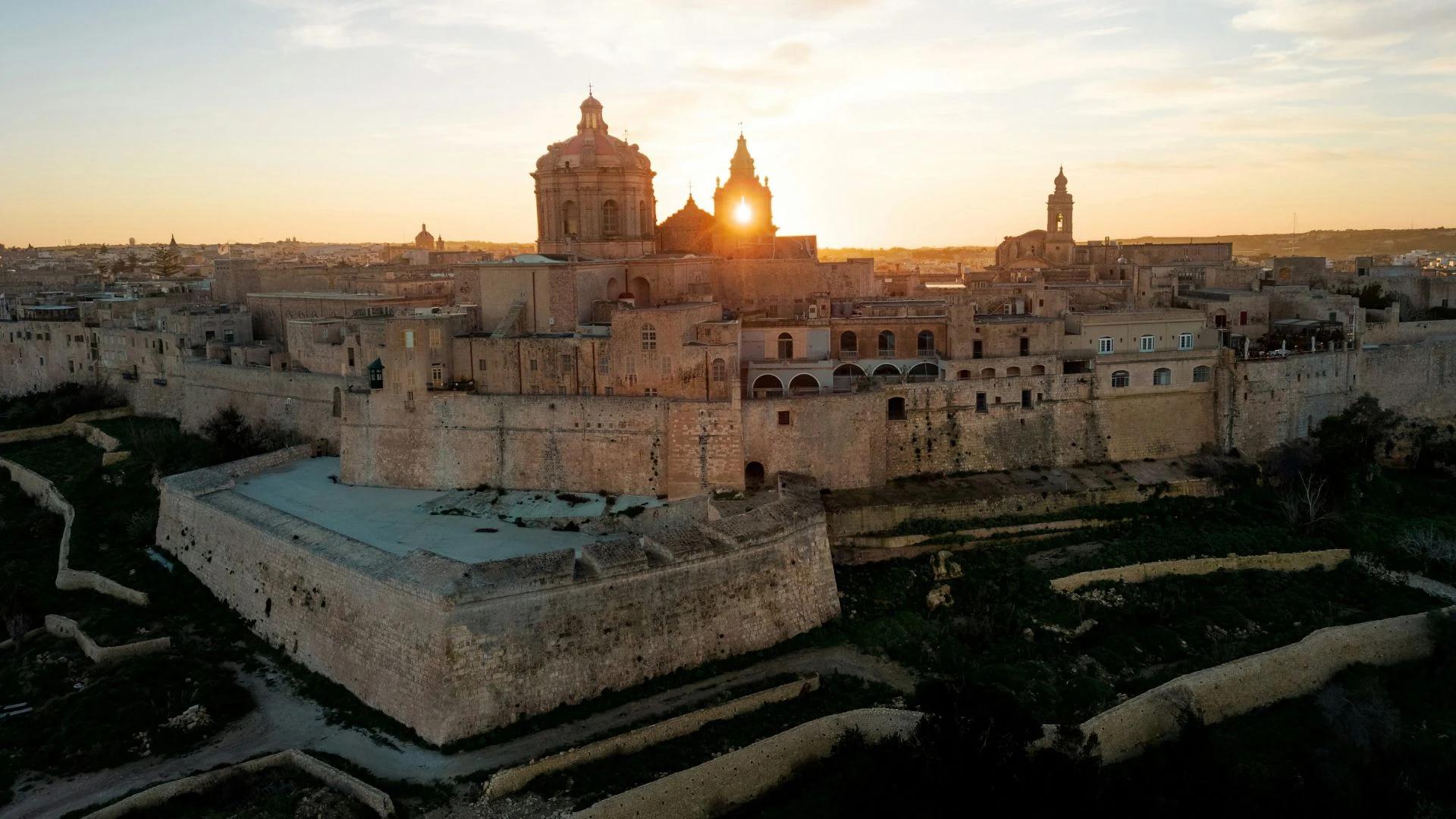
A walled city of 300 souls. No cars. No noise. At dawn and at dusk — when the day visitors have gone — the limestone alleys are yours. One of the most perfectly preserved medieval cities in Europe, treated by most visitors as a two-hour stop on the way somewhere else.
Mdina was the capital of Malta for centuries. It has a cathedral, palaces, a priory, and streets so narrow that the Knights of St John had to widen them so their horses could pass. It is extraordinarily intact, extraordinarily beautiful, and treated by most visitors as a two-hour stop. Stay longer.
Motor vehicles are banned inside the walls except for residents and emergency services. The result is silence — genuine, startling silence in a country where most places hum with traffic. The only sound is your footsteps on limestone and, occasionally, the clop of a karozzin horse.
Mdina's limestone turns a deep amber in the hour before sunset. The city faces west across the Maltese plain to the sea. From Bastion Square, the view stretches across the entire island. At dusk, with the walls glowing and the day visitors gone, it is one of the most beautiful scenes in the Mediterranean.
Mdina doubled as King's Landing in the first series of Game of Thrones. You would never know. The production left nothing behind and the city absorbed it with characteristic indifference. The streets look exactly as they have for five centuries. That tells you something about how seriously Mdina takes its own continuity.
Mild temperatures, wildflowers on the bastions, fewer crowds. Easter brings religious processions through the streets.
Very hot in July and August. Visit at dawn or after 6pm when the heat lifts and the day visitors have left.
October and November bring warm days, golden light on the limestone, and the quietest streets of the year.
Cool, quiet, and atmospheric. Some restaurants reduce hours. A melancholic winter beauty rewards those who find it.
Bus route 51 runs regularly from Valletta to Rabat, a five-minute walk from Mdina's gate. By car, take the central spine road inland. Parking is just outside the walls — nothing motorised goes inside.
The airport is 12km south. Hire a car at arrivals or take a taxi. You can be inside the walls before the crowd from your flight has collected their bags.
Leave the hotel before breakfast and arrive at dawn. The contrast between the coast's noise and Mdina's silence is itself part of the experience.
No motor vehicles are permitted inside the city walls. Park outside the main gate and walk in. The entire walled city is explored on foot in under 20 minutes — though you will find yourself going around again.
Mdina's immediate neighbour, separated only by the city gate. St Paul's Catacombs and St Agatha's Catacombs are cut into the rock beneath the town. The streets above are domestic, local, and unhurried.
Europe's smallest capital — a fortified city of Baroque churches, palaces, and sea views at the end of every street. UNESCO-listed and increasingly excellent for eating and drinking.
Malta's highest point — 253 metres of sheer limestone above the Mediterranean. Virtually no tourist infrastructure. One of the most dramatic coastal walks in the Mediterranean.
The original home of the Knights of St John — a fortified peninsula older than Valletta and far less visited. The waterfront looks across to Valletta in a way that makes both cities make sense.
The third-largest unsupported dome in the world. In 1942 a German bomb fell through it during Mass and failed to explode. The congregation took it as a miracle. The bomb is still there.
Malta's quieter, greener sister island. The hilltop citadel of Victoria makes Mdina look crowded by comparison. Slower, older, and increasingly the reason people say they prefer Gozo to Malta.