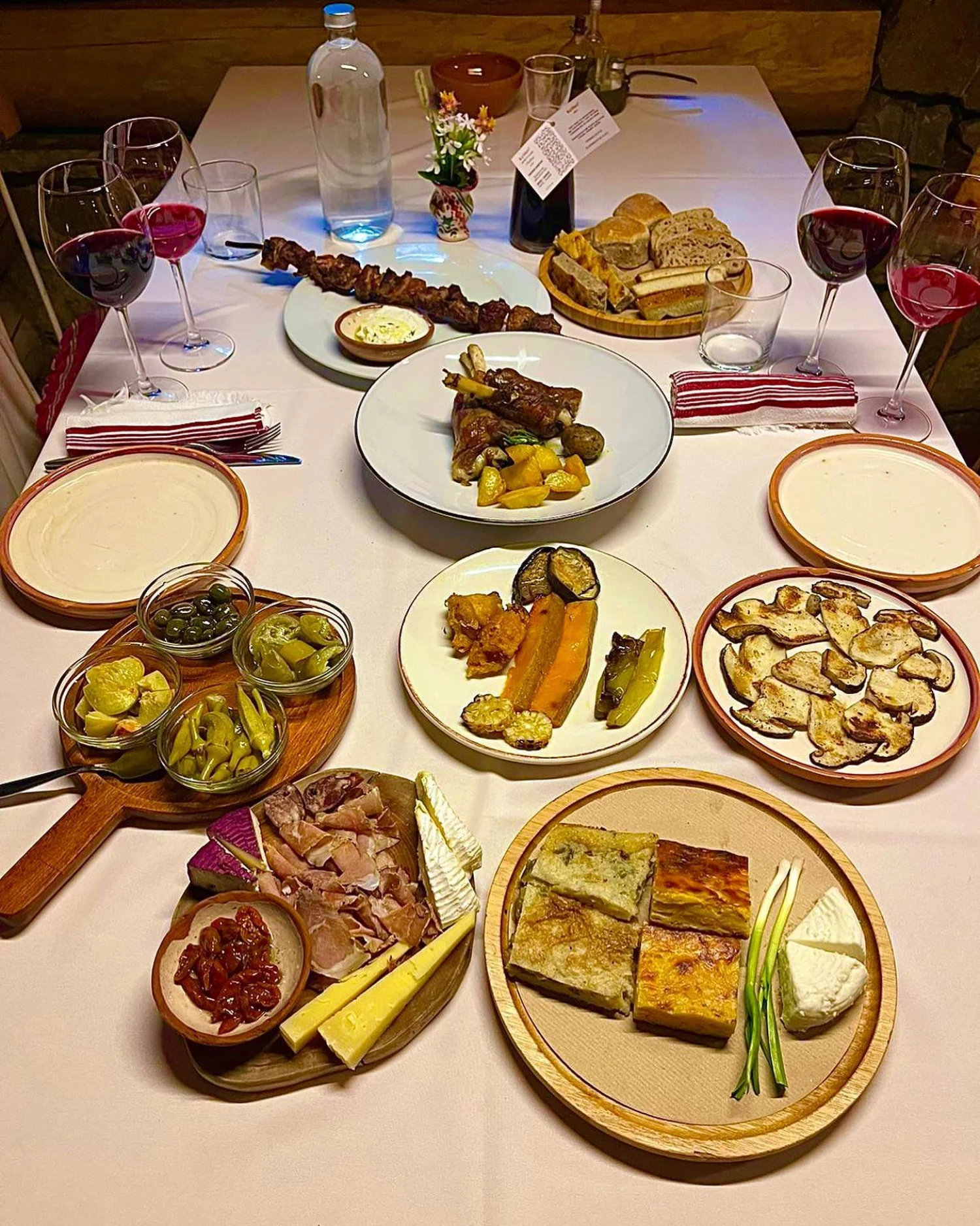
The guesthouse kitchen is the restaurant
There are no restaurants in Theth or Valbona in the conventional sense. A handful of guesthouses serve food to non-residents in high season, but in general, if you are staying in the mountains, you eat where you sleep. This is not a problem. The food cooked in Albanian mountain guesthouses — from vegetables grown in the garden, eggs from the hens outside, lamb from the hills, dairy from the family’s own animals — is among the best food in Albania. You will not eat badly. You will likely eat better than you have eaten anywhere else on this trip.
Albanian mountain cuisine is built on the same principles as all great peasant food: excellent ingredients, simple preparation, and the accumulated knowledge of what works. The mountains of northern Albania are extraordinarily fertile — the Theth and Valbona valleys receive heavy snowmelt, the soil is rich, and the growing season produces vegetables, herbs, and fruit that have never seen a supermarket or a cold store.
The meal will begin with whatever the garden has produced: cucumbers and tomatoes with olive oil and white cheese (djathë i bardhë), cornbread (miskë), and probably some form of byrek — the flaky pastry filled with cheese, spinach, or meat that appears at every Albanian table. The main course will likely be lamb or kid goat, either grilled over open coals or slow-cooked under the saç (a domed cast-iron lid placed over the meat and covered in hot coals — a technique unchanged since Ottoman times). The lamb under the saç is the dish to ask for specifically.
Dessert is often fresh fruit and honey from local hives. Coffee is strong, black, and served in small cups. And then the host will bring raki — a clear fruit brandy, usually plum or grape, usually homemade, usually stronger than it looks. It will be poured without being asked. It is appropriate to accept.
Dishes to know
Byrek
The defining Albanian pastry — layers of thin filo dough (pëte) filled with cheese, spinach, minced meat, or potato, baked in a round pan and cut into slices. Every household in Albania has its own version. In the mountains, it appears at breakfast and as a snack and as an accompaniment to everything else.
Tërë kosi (Lamb baked with yoghurt)
A dish of slow-baked lamb covered in yoghurt and egg — one of the most celebrated dishes in Albanian cuisine, and genuinely difficult to find outside of Albania. The yoghurt is always homemade, thicker and more acidic than anything sold in a shop, and it transforms the lamb into something extraordinary.
Mish i pjekur në saç (Meat under the saç)
Lamb or kid goat placed under the domed cast-iron lid and covered with hot coals for two to three hours. The saç technique is used across the Balkans but the Albanians have been refining it the longest. The meat emerges tender, smoky, and falling off the bone. Ask for it specifically when you arrive. The host will need advance notice.
Djathë i bardhë (White cheese)
The Albanian equivalent of feta — but made from sheep’s milk in the mountain guesthouses and tasting entirely different from the industrial version. Eaten with tomatoes, bread, and olive oil as a starter and as an accompaniment throughout the meal. The quality in a good mountain guesthouse is exceptional.
Paçë (Head soup)
The traditional Albanian hangover cure and winter breakfast — a broth made from the head, feet, and tripe of a sheep, seasoned with garlic and vinegar. Polarising for the uninitiated; deeply restorative for anyone who has experienced it. Available in the market restaurants of Shkodra in the early morning.
Ballokume (Elbasan cake)
A dense, golden cake made from cornflour, butter, sugar, and eggs — the traditional sweet of central Albania, named after the city of Elbasan. Found in bakeries and pastry shops throughout the country. Not specific to the north but excellent and almost entirely unknown outside Albania.
On drink
Raki, mountain spring water, and the wine the rest of the world doesn’t know
Homemade raki is the national spirit of Albania — a clear fruit brandy, usually between 40% and 60% alcohol, made by virtually every family with a fruit tree. The plum raki of the north (raki kumbulle) is particularly good. It will be poured freely in any guesthouse that considers you a proper guest. Albanian wine is produced mainly in the south and is largely unknown outside the country: the Kallmet red grape, indigenous to the Shkodra region, produces something worth seeking out in the city. In the mountains, drink water — the spring water in Theth and Valbona is drinkable directly from the source and is extraordinary.
In Shkodra: Restaurant Tradita
The best restaurant in Shkodra for traditional Albanian cuisine — attached to Hotel Tradita and serving the full repertoire of northern Albanian dishes in a setting that reflects the culture they come from. Order the lamb, the byrek, and whatever the seasonal specials are. Ask the staff what the house recommends. The wine list includes Kallmet.
hoteltradita.com · Shkodra city centre