Unfamous Places recommends
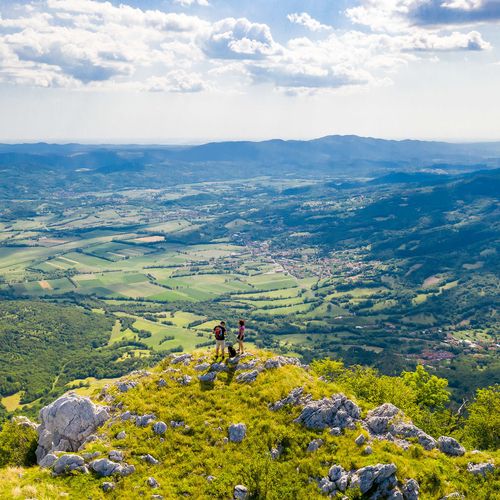
Locals call it Paradise Valley. An hour from Ljubljana, the Burja wind shapes extraordinary wines from grapes that grow nowhere else on earth, two Michelin-starred restaurants sit in medieval buildings, and almost nobody outside Slovenia knows it exists.
Indigenous grapes — Zelen, Pinela, Klarnica — grow nowhere else on earth. Scores of family cellars produce natural wines of serious quality, many unshippable outside Slovenia. No tasting-room tourism, no coach parties. A hand-painted sign at the end of a track and someone pouring from the barrel.
DAM in Nova Gorica earned its star for modern Slovenian cooking of exceptional precision. Gostilna Pri Lojzetu sits in a 17th-century Palladian manor above the valley. Both are bookable weeks, not months, in advance — a rarity for restaurants of this calibre anywhere in Europe.
While the rest of the country is still under snow, almond and peach trees bloom in Vipava. The Burja wind keeps the sky brilliant and the air clear. April here feels like June elsewhere, and the trails are empty. The osmica wine taverns open, the cellars throw their doors wide.
Nearly 2,000 years of history etched into defensive walls, castle ruins, and narrow alleyways. Rihemberk Castle has the tallest tower in Slovenia. The town of Vipava sits on the only delta-shaped riverhead in Europe. Ancient Egyptian sarcophagi rest in the town cemetery, returned by a Habsburg consul born here.
First spring in Slovenia. Almond blossom in March, wildflowers through May. Osmica season opens the wine cellars.
Warm and lively. July and August can be hot on the valley floor. Saturday market at its best.
Harvest season. Vineyards at their most beautiful. The second osmica season. September and October ideal.
Some cellars and guesthouses close. The Burja is at its fiercest. Not recommended for a first visit.
The H1 motorway connects Ljubljana directly to Ajdovščina. Nomago and Arriva run several buses daily. Once in the valley a car is a significant advantage.
Often cheaper than Ljubljana for Western European travellers. 57km from Vipava — hire a car at the airport and you're in the valley before the afternoon light changes.
140km west via a scenic drive through the Italian countryside and across the Slovenian border. Excellent for those combining northern Italy with the valley.
A car is strongly recommended once in the valley. Public transport between villages, wine estates, and hiking trailheads is limited. Bicycle hire is available from most accommodation.
Slovenia's other great wine region — olive groves, limestone villages, and views to the Adriatic on clear days. Often called the Tuscany of Slovenia, and for once the comparison earns its keep.
Turquoise river, Julian Alps, and the ghost of the Isonzo front. One of the most beautiful valleys in Europe — fly-fishing, kayaking, and mountain scenery of the kind that makes other mountain scenery look ordinary.
A UNESCO underground canyon of extraordinary scale — arguably more impressive than Postojna and far less visited. A river disappears into the rock in a spectacle that stays with you.
The twin city to Nova Gorica, separated by a border that once divided Europe. Now a joint European Capital of Culture — the shared history of two cities is unlike anything else on the continent.
The birthplace of the Lipizzaner horse — a working stud farm with 450 years of continuous history, open to visitors with performances and tours. Unexpectedly moving for those who find it.
The great Habsburg port city — melancholic, magnificent, unlike anywhere else in Italy. Coffee culture of fanatical seriousness, a grand seafront promenade, and the ghost of a Central European empire in every palazzo.